
Calaveras County highlights include stunning natural wonders like Calaveras Big Trees State Park, famous for giant sequoias, and numerous caves (Moaning Caverns, Mercer Caverns, California Cavern) offering adventure; vibrant Gold Rush towns like Murphys, known for its wine tasting and historic charm; major events such as the Calaveras Frog Jump Jubilee; and outdoor recreation from hiking and fishing to the burgeoning wine and arts scene, especially around Ironstone Vineyards. blending agricultural charm, gold history, and Northern California nature.
The Calaveras Fault is a major, active right-lateral strike-slip fault, part of the larger San Andreas Fault system in the San Francisco Bay Area, running from near Hollister north through the East Bay to the San Ramon area, known for significant seismicity, including the 1984 M6.2 Morgan Hill earthquake, and exhibits both slow creep and potential for larger earthquakes as stress builds between its segments and with the Hayward Fault.
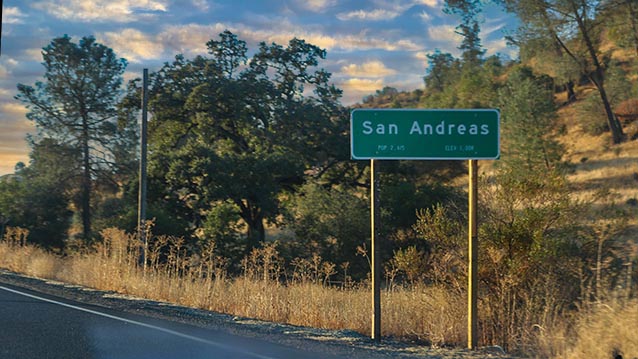
The San Andreas Fault is a massive 750-mile, right-lateral strike-slip fault stretching across California, marking the boundary between the Pacific and North American tectonic plates. Recent physics-based computer models indicate this fault system is under its highest tectonic stress levels in 1,000 years.
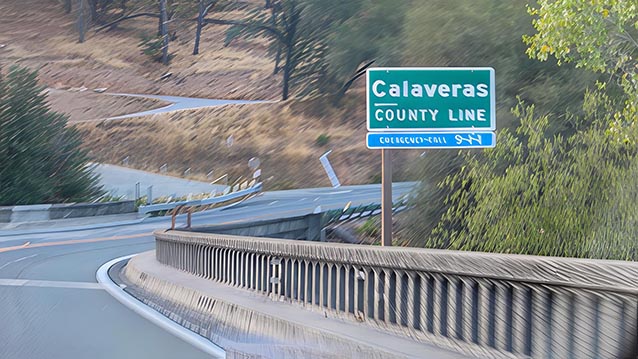
Calaveras County is a stunning blend of Gold Country history and High Sierra wilderness.
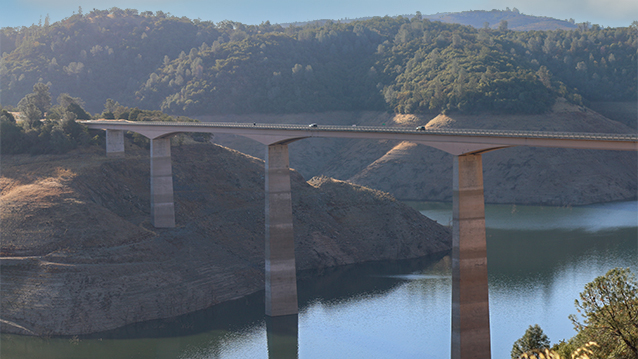
This is the Archie Stevenot Bridge which carries State Route 49 over New Melones Lake in Calaveras County, California. The bridge spans the Stanislaus River between Calaveas County and Tuolumne Counties.
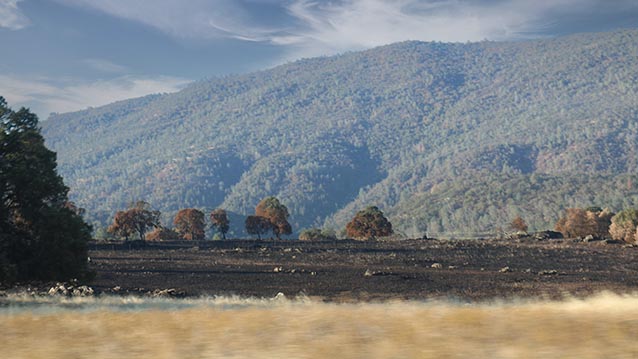
Located just east of Shingle Springs, it is famous for its giant sequoias, world-class wineries, underground caverns, and Mark Twain's legendary leaping frog.
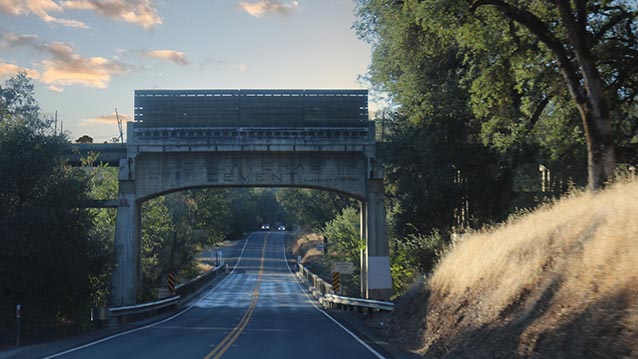
This is the Calaveras Cement Company Underpass, a historic structure located in Calaveras County. It was built in 1935 to carry a railroad line over State Route 49, connecting quarries to a cement plant. Although the railroad was abandonded in 1983, the bridge remains standing today.
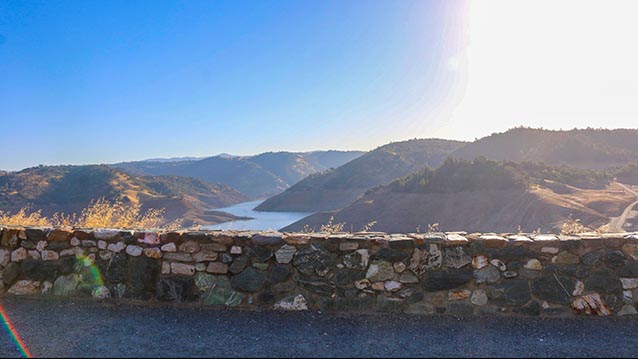
This tranquil section of the Stanislaus River at the foot of Carson Hill is a perfect natural crossing for a small ferry boat to shuttle eager California Gold Rush miners across the river canyon.
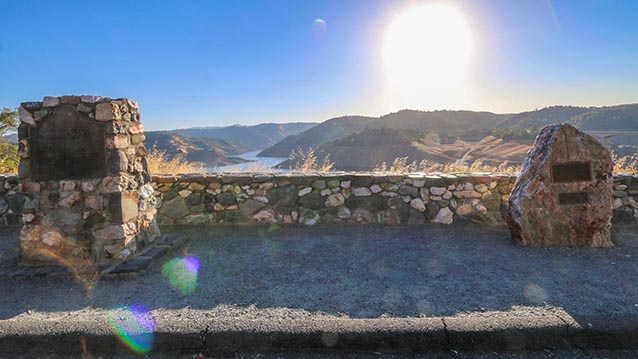
Robinson's Ferry (boat) was a vital Gold Rush-era crossing on the Stanislaus River. Submerged beneath New Melones Lake today Melones, California - the site's rich history is celebrated at a dedicated highway vista point.
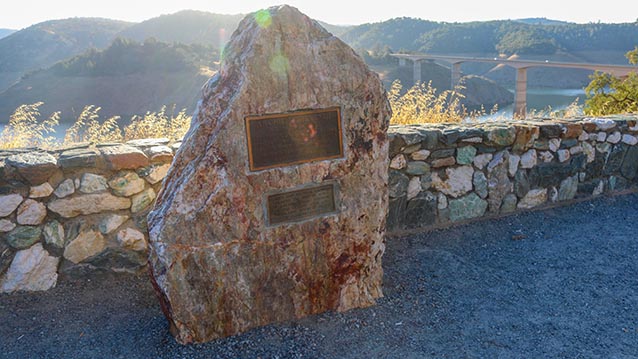
It was established in 1848 by John W. Robinson and Stephen Mead to move California Gold Rush miners, animals, and cargo across the river on Robinson's Ferry (boat).
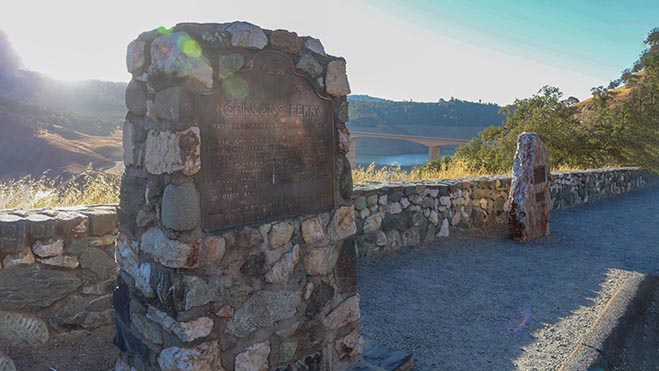
The toll to cross was exactly 50 cents for each person, horse, or other animal on Robinson's Ferry
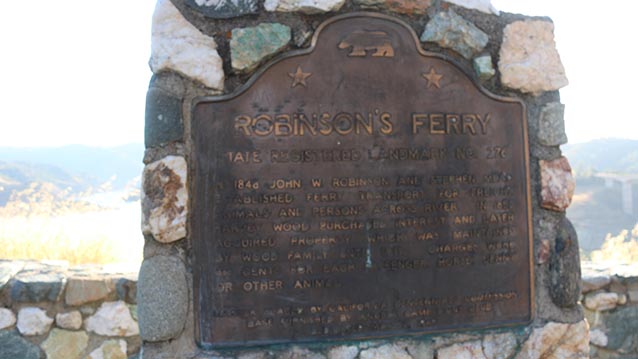
Harvey Wood purchased a stake in 1856 and later acquired the property, which was maintained by the Wood family until 1911.
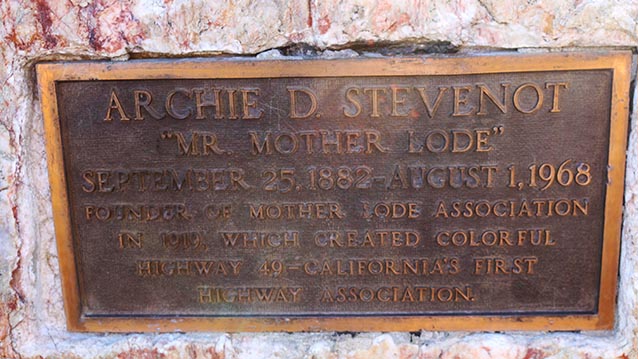
The Stevenot family established the borax industry in California – Archie Stevenot was proclaimed “Mr. Mother Lode” by resolution of the 1961 session of the State Legislature. Not only he but his father and grandfather lent fame to the Carson Hill region of California. He foundedd the Mother Lode Highway Association which single handedly led the charge to establish State Route 49 as a unified scenic highway to connedt historic Gold Rush towns.
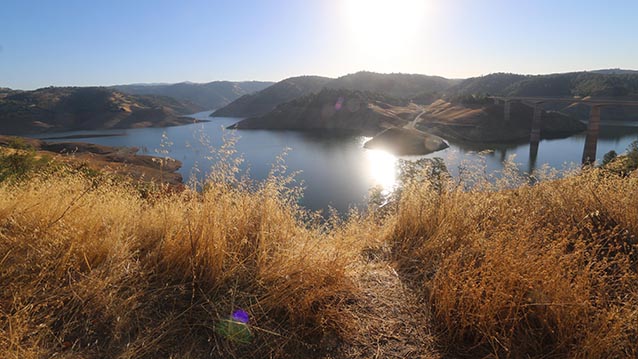
Lake for boating, hiking and picnicking in lovely California.
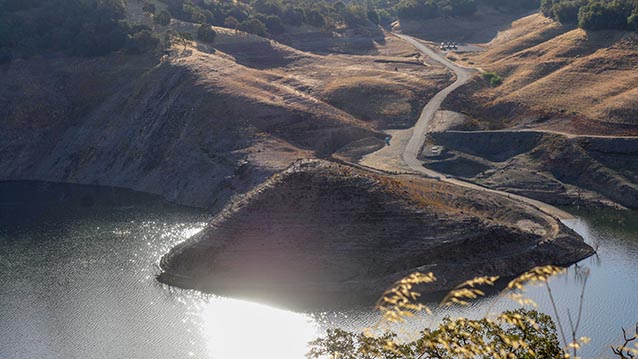
Highlighting the earth and rock embankment in California.
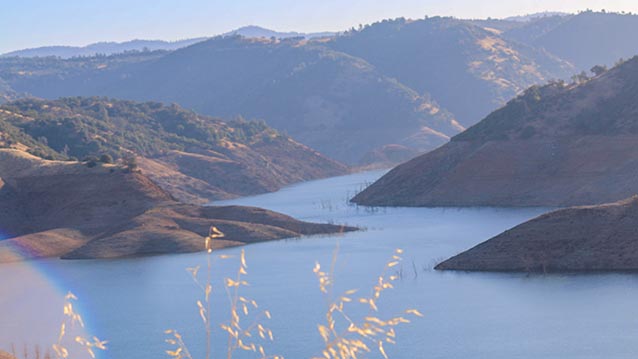
The gold nuggest found in the river resembled melon seeds, so the town was called Melones. It was flooded to make the reservoir.
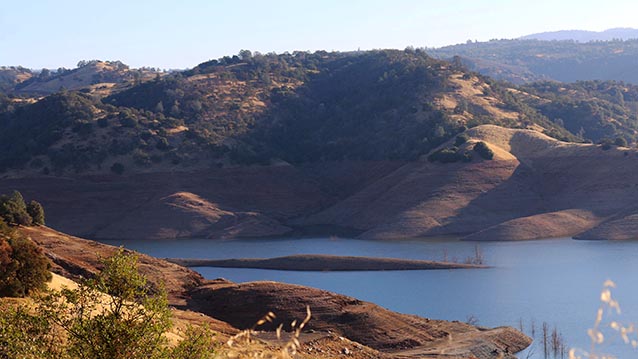
Gold miners struck massive quartz veins in the area.
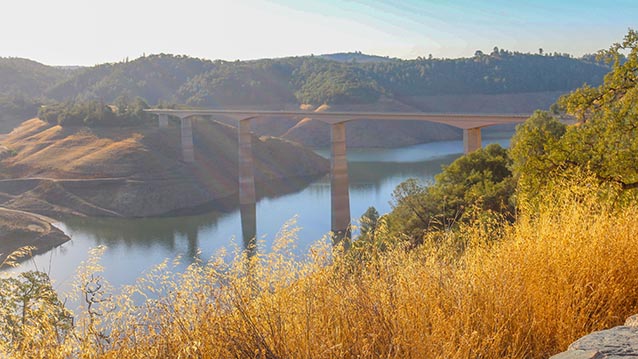
The Archie Stevenot Bridge is one of the highest reservoir bridges in the United States and won an AISC Prize Btridge award in 1978 for long-span bridges. The lake below is formed by the New Melones Dam, which turned the river into a reservoir.
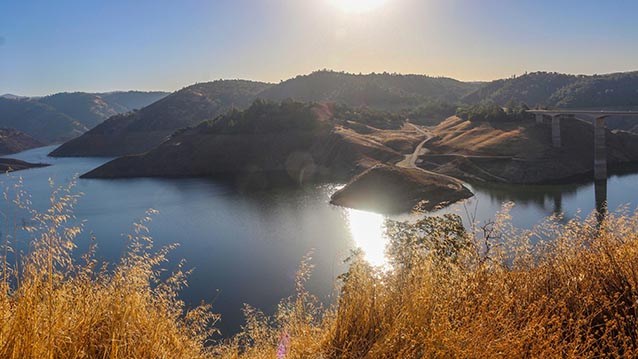
During drought years, you'll see rececding lake lines.